
The perennial alignment problem
We need control of our rulers, as always, not merely alignment

I
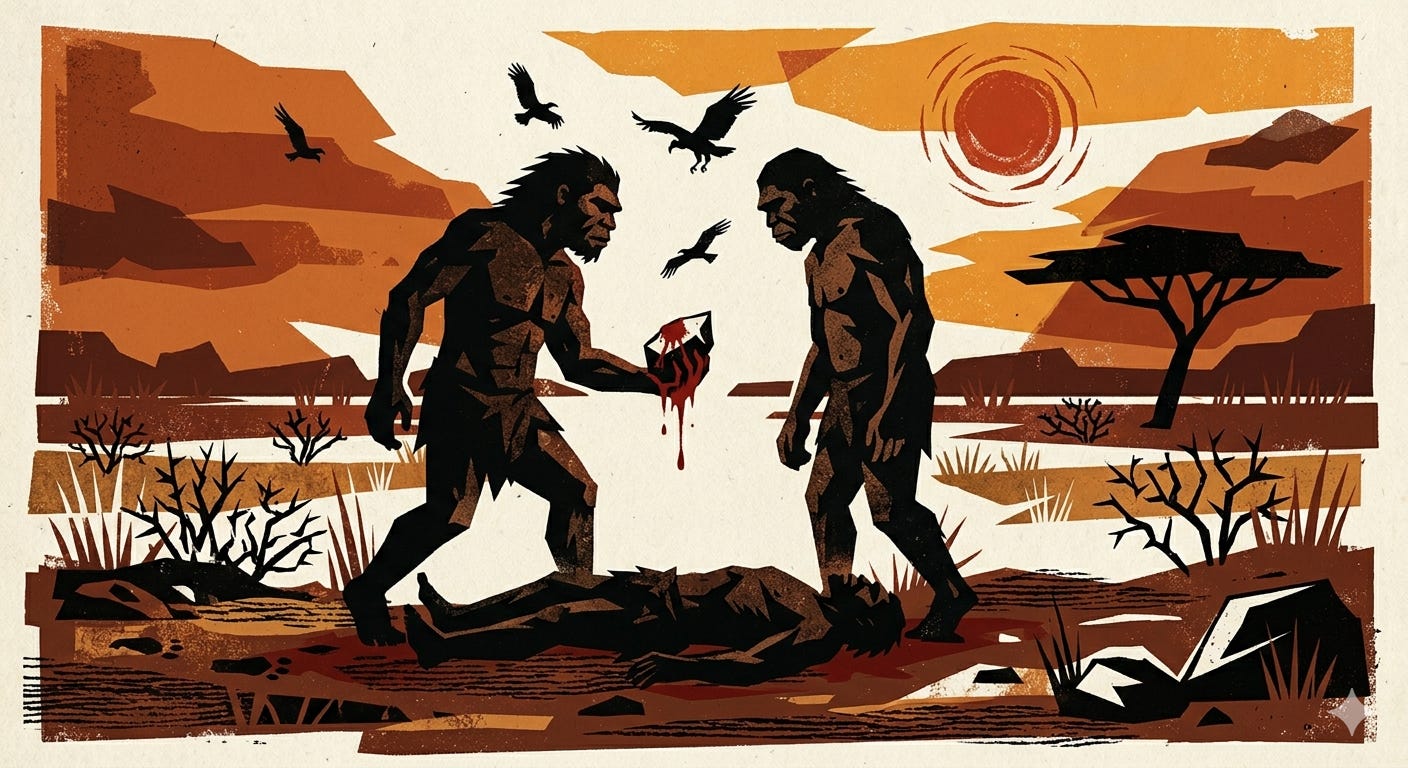
Two million years ago, somewhere on the African savannah, bipedal hominins became adroit at throwing rocks. Now they could gang-up and kill from a distance. Coercive power was no longer based on individual ferocity. Cooperation became necessary.
II
In The Goodness Paradox, Richard Wrangham describes how tyrannical alpha males, in early human groups, did not die in fair fights. Coalitions of weaker men murdered them in their sleep. Language allows conspiracy. Weapons make the killing easy and one-sided. Over generations, we were domesticated by our talent for assassinating bad leaders.
III
Aristotle noted that the ordinary men who rowed in the triremes for the navy had become indispensable to Athens’ defence. This gave them real political power, making Athens far too democratic for Aristotle’s liking.
IV
The 1918 Representation of the People Act — which gave the vote to all British men and to British women over thirty — was passed, begrudgingly, seven weeks before the Armistice. (Margaret Levi, Of Rule and Revenue.)
V
In The Oil Curse, Michael Ross observes that oil-producing states are fifty percent more likely to be ruled by autocrats. A king who needs your harvest needs you, a king with a pipeline doesn’t.
VI
In Ukraine, a $500 drone destroys a $10,000,000 tank. But the drone relies on technology from Google, Palantir, and Starlink.
VII
States will even sacrifice economic efficiency to maintain power; citizens therefore need the ability to threaten revolution as an insurance policy. (Acemoglu and Robinson, Economic Origins of Dictatorship and Democracy).
VIII
Sam Altman and Dario Amodei have said AI will eliminate vast categories of work, destabilise the economy, require government intervention, and concentrate immense power in the hands of whoever controls the systems.
IX
“Dictators always lie about what they’ve done, but are often quite plain about what they want to do.” — Garry Kasparov
X
Under Xi Jinping, freedom in China has withered. The state needs the tax revenue but doesn’t fear the people. New surveillance techniques, competent functionaries, and selective repression have produced what Andrew Nathan calls “authoritarian resilience”.
XI
Palantir’s CEO wrote a book, called The Technological Republic, which argues it is the patriotic duty of large American corporations to unite with the state apparatus.
XII
The Stasi employed one out of sixty-three East German citizens as informants. It was successful, for a time, because it increased the share of people with a stake in the regime. Ultimately, though, it was too expensive.
XIII
The most important white-collar job loss will be when the NSA lays off three quarters of its staff.
XIV
November 1532, Cajamarca. The Inca Atahualpa, lord of twelve million people, met Francisco Pizarro on a high plain in the Andes. Pizarro had 168 men. Atahualpa had several thousand just in his immediate vicinity. By nightfall, Atahualpa was a prisoner and seven thousand of his subjects were dead, with no Spanish losses.
XV
Palantir’s software is integrated into every single data source used by US national security agencies. It is now irreplaceable.
XVI
Militaries increasingly use drones and robots, rather than human soldiers. Elite, bourgeois labour can be done by machines that neither eat, nor sleep, nor strike.
XVII
Leaders who neither need nor fear their people are called tyrants. Merely to see this requires a level of cynicism and world-weariness which is unnatural for most people until they are being imprisoned or bombed.
XVIII
“What counts as a crisis is the expectation of loss of control.” — Stafford Beer.
XIX
People want rulers, human or machine, with the right values. We look for the values in their speech or writing, and in their actions before they have power. Occasionally, value alignment works. When it fails, we need control. Throwing stones won’t cut it and we no longer row the triremes. Tyranny’s getting cheaper. We need new leverage.
XX
This is a crisis.
Starkly alarming. You’re a voice of reason in times of insanity.
I would like to know what you think of the future of AI in animal welfare. Will future AI systems factor in animal sentience more than it currently is, or will they exasperate human failure to consistently uphold animal welfare?